
Services
Anorectal Surgery (for Benign Disorders of the Anus and Rectum)
What are benign disorders of the anus and rectum?
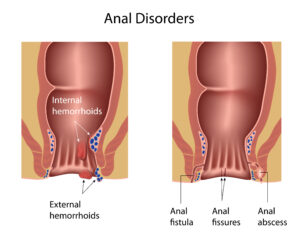
Also called anorectal conditions are ailments that affect the anus and rectum. The prevalent types of anorectal disorders are:
- Haemorrhoids:
These are swollen veins that appear in the lower rectum or anus, also known as piles. Internal haemorrhoids can form inside the rectum, while external haemorrhoids can develop under the skin surrounding the anus. Those who suffer from haemorrhoids may experience symptoms like painless bleeding during bowel movements, severe pain, swelling around the anus, and itching or irritation in the anus. - Anal fistula:
This refers to an unusual tunnel that connects the anal canal to the skin surrounding the buttocks. An anal fistula usually occurs as a result of an abscess that has formed in an anal gland and triggered a reaction. Symptoms of an anal fistula include recurrent anal abscesses, bleeding, swelling around the anus, and pain during bowel movements. - Anal fissures:
These are tiny tears in the thin, moist tissue that lines the anus. Anal fissures can occur when passing large or hard stools during a bowel movement. Indications of anal fissures encompass discomfort while passing stool, lingering pain following bowel movements, an observable split on the skin bordering the anus, bleeding on the toilet paper or stool after a bowel movement, as well as a small protuberance or tag of skin near the anal fissure.
What does surgery entail?
If non-invasive treatments have been exhausted, surgery may be recommended to address your condition. Depending on your situation, Dr Viljoen may perform any of the following surgical procedures:
- Haemorrhoidectomy involves making incisions on the tissue surrounding the haemorrhoid, tying off the swollen vein to stop bleeding, and removing the haemorrhoid. The incisions are then sutured closed.
- Stapled haemorrhoidectomy/procedure for prolapsing haemorrhoids (PPH) is a procedure that involves utilising a circular stapling device to remove a ring of haemorrhoid tissue and mucosa in the upper anal canal.
- Anal fissure surgery: This surgery is usually recommended for chronic anal fissures that are unresponsive to other treatments or if symptoms are severe. The surgery may involve a lateral internal sphincterotomy, whereby the surgeon cuts a small section of the anal sphincter muscle to alleviate pain and spasms and facilitate the healing of the anal fissure.
FAQ
1What causes anorectal disorders?
Anorectal disorders can be caused by a variety of factors, including chronic constipation, straining during bowel movements, pregnancy and childbirth, ageing, obesity, and a family history of anorectal disorders.
2What are the symptoms of anorectal disorders?
The symptoms of anorectal disorders vary depending on the specific disorder, but they can include bleeding, pain, itching, and swelling around the anus.
3Can anorectal disorders be prevented?
Many anorectal disorders can be prevented by maintaining a healthy diet, staying physically active, avoiding straining during bowel movements and practising good hygiene.